Color Tower 2: Box Stacking Puzzle
Reviews
Color Tower 2 strips stacking down to one decision: when to release the box. That simplicity makes it easy to start, but the physics-driven wobble creates real tension as the tower rises. The shadow guide and one-touch controls keep the experience accessible, while global leaderboards give a reason to keep restarting. It suits players who enjoy precision challenges and short sessions. The main limitation is the lack of variety beyond the core loop, which may not hold everyone's attention long-term.
About This Game
The Core Timing Challenge
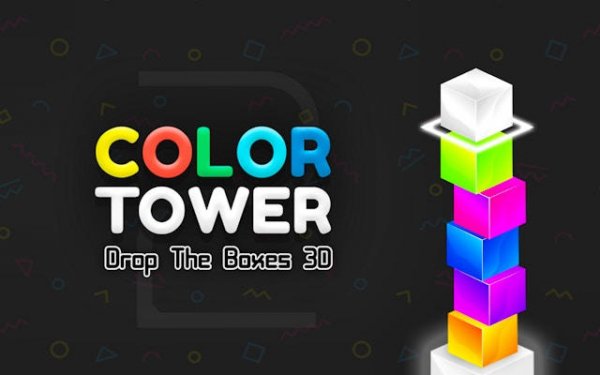
In Color Tower 2, a box slides horizontally above the tower you are building. Your only action is to tap or click at the moment the box lines up with the stack. A shadow beneath the falling box shows where it will land, so you can judge alignment before releasing. The closer the box is to center, the more stable the tower remains. Each drop is a small decision: release now or wait for a better position. Because the box never stops moving on its own, hesitation costs accuracy.
Balance and Collapse
The game's difficulty comes from physics rather than complicated rules. As the tower grows, even a slight offset adds up. Boxes that are too far from center make the structure wobble, and enough misalignment brings the whole tower down. There is no timer or life system, so the run ends only when the tower falls. Your score is based on the height you reach, which means every drop either buys you more height or risks ending the attempt.
Visual Feedback and Controls
Vibrant 3D graphics make each colored box stand out against the background, and the shadow mechanic gives clear placement feedback without cluttering the screen. One-touch controls keep the focus on timing. The game includes global leaderboards for comparing scores and social sharing options for challenging friends. With no time limits, you can play in short sessions or keep restarting until you beat your personal best.
Approach for Taller Towers
Building a centered foundation early pays off later, because a stable base tolerates small mistakes higher up. Rushing drops usually leads to wobble, so waiting for the box to pass directly over the stack is safer than guessing. The shadow is the most reliable guide, especially as speed increases. Precision matters more than speed, and regular practice sharpens the timing needed for higher scores.
Editorial Notes
✅ Compatibility & Testing
System Requirements














































Comments
0 comments