Classic Fighter Showdown
Reviews
Classic Fighter Showdown targets players who value the fundamentals of arcade fighting: reading opponents, timing blocks, and learning character-specific strengths. Its roster mixes close-range and projectile-focused fighters, so matchups reward adaptation rather than one fixed strategy. Single-player progression and local two-player mode share the same mechanics, and adjustable difficulty plus practice mode support gradual improvement. The retro presentation keeps health bars and timers clear. The main limitation is that competition stays local, with no online play described.
About This Game
Combat Flow and Timing
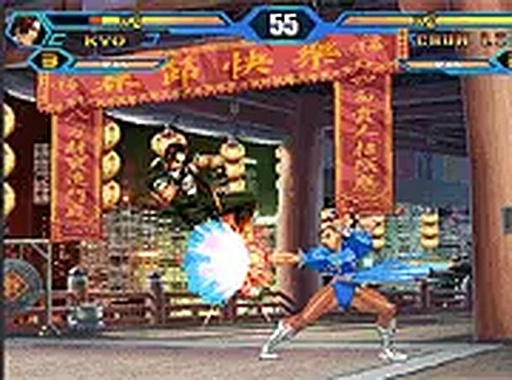
Every match in Classic Fighter Showdown starts with both fighters facing off, and rounds continue until one health bar is empty. The outcome depends on reading an opponent's movement, choosing when to strike, and knowing when to hold back and block. Special abilities add another layer: they hit harder than basic attacks but require the right input combination and a sensible moment to use them. The controls are built to feel familiar to anyone who has spent time with arcade fighters, while still leaving room for newcomers to improve gradually.
Fighter Styles and Matchups
The roster is deliberately varied. Some characters are built for close-range pressure, while others prefer to keep distance and rely on projectiles. Each fighter has a basic move set plus more powerful special attacks tied to specific inputs. Because strengths and weaknesses differ, no single approach works against every opponent. Players can cycle through the roster to find a fighter whose range and pace match their instincts.
Single-Player and Local Two-Player
There are two main ways to play. In single-player, you face a series of computer-controlled opponents that grow harder as you progress, which makes it a practical place to learn character move sets and test strategies. Two-player mode puts both fighters on the same keyboard, so a friend or family member can compete locally without extra hardware. Both modes share the same core mechanics, so habits built in one carry over to the other. Adjustable difficulty settings let players set a challenge that suits their current skill level.
Retro Presentation and Practice
The visual style is modeled on classic arcade machines: character sprites, backgrounds, and effects use a retro aesthetic, with a bright, clear color palette that keeps the action readable. Health bars and timers sit prominently on the interface. Practice mode supports the learning curve, giving players room to drill timing for attacks and blocks and to experiment with sequences. The difficulty curve aims for steady progress rather than sudden spikes, which suits both casual players and those refining their fighting game fundamentals.
Editorial Notes
Compatibility
System Requirements














































Comments
0 comments