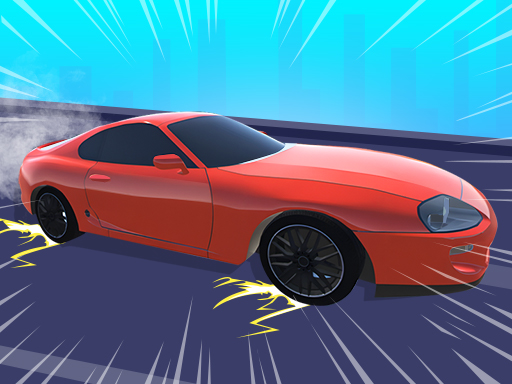
Urban Speed Racing Challenge
Reviews
Urban Speed Racing Challenge sticks to what matters: responsive drift physics, strategic speed boosts, and AI races across city streets. The lack of violent or mature content makes it broadly accessible, and the emphasis on lap-time improvement gives solo players a reason to keep practicing. Its main limitation is that the source describes only AI competition, so anyone seeking multiplayer should verify before buying.
About This Game
Track Design and City Atmosphere
Urban Speed Racing Challenge sets its races on detailed city roadways filled with traffic and sharp turns. The environments are visually clear without being distracting, so you can focus on the racing line. Each track layout demands that you anticipate corners and plan your drift entries, because the streets are not simple ovals. Traffic adds moving obstacles that force you to pick safe gaps rather than hold a single racing line.
Drift Physics and Speed Boosts
The game uses a physics model that simulates tire grip and momentum, so drifting feels responsive to your steering and throttle inputs. Holding a controlled slide through a corner preserves speed; overdoing it sends you spinning. Speed boost items appear along the route and give a temporary burst when activated. The smart play is to save boosts for straight sections or for overtaking moments, not to waste them mid-corner. Engine sounds vary by vehicle type, which helps you sense when you are near the limit.
Racing Against AI and Improving Lap Times
Every race pits you against AI-controlled opponents with differing challenge levels. The goal is simple: finish first, but the deeper loop is shaving time off your laps. Collisions slow you down and break your rhythm, so clean driving usually beats aggressive blocking. The controls are intuitive—steer, accelerate, brake—but consistent results come from learning each track's turn sequence and practicing corner exits. Because there are no violent or mature themes, the focus stays entirely on reflexes, timing, and precision.
Editorial Notes
Compatibility
System Requirements














































Comments
0 comments