Maze Balance Puzzle
Reviews
Maze Balance Puzzle targets players who enjoy calm, methodical problem-solving rather than time pressure. The key-collection loop gives each level a clear goal, and traps add consequences without graphic content. The gradual difficulty curve supports improvement over time. Its main limitation is that progress depends on memory and patience, which may frustrate players seeking faster-paced arcade action.
About This Game
Core Objective and Loop
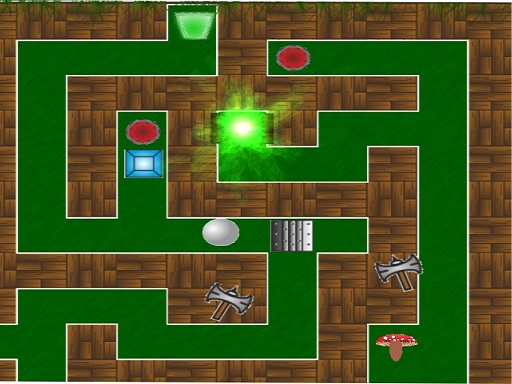
Each level of Maze Balance Puzzle asks the same fundamental question: how do you collect every key without stepping into a trap? The character moves through a maze, and the gate stays locked until the last key is picked up. That structure turns simple navigation into a planning exercise, because the order in which you collect keys affects how much of the maze you must cross twice.
Traps and Route Planning
Traps are the main source of tension. Some block a corridor permanently for that attempt, while others send the character back to the start. Because trap behavior is consistent within a level, the real challenge is memory and anticipation. A route that looks efficient on the first try often needs revision once you see where the hazards sit. [IMG_1]
Controls and Accessibility
Movement uses on-screen controls, which keeps the game playable on both desktop and mobile browsers without extra setup. The input scheme is deliberately simple, so younger players and newcomers to puzzle games can focus on the maze itself rather than learning complex commands.
Difficulty Curve and Audience
Mazes grow more complex as you progress, adding more traps and longer routes between keys. The difficulty rises gradually enough that concentration and logical thinking improve alongside the level design. There is no violent or mature content, which makes it suitable for family play, though the trap-reset mechanic still demands patience from anyone who dislikes repeating sections.
Editorial Notes
✅ Compatibility & Testing
System Requirements















































Comments
0 comments