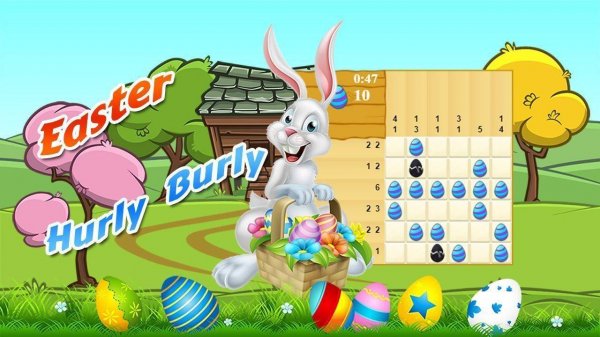
Spring Season Grid Logic Challenge
Reviews
Spring Season Grid Logic Challenge sticks to classic nonogram rules: read the row and column numbers, fill consecutive cells, and reveal a hidden spring picture. The gradual difficulty curve and star rating system give it structure without adding pressure. Its family-friendly imagery and pause-friendly design suit parents and children or anyone wanting a quiet logic exercise. The main limitation is that it stays within the nonogram formula, so players seeking varied puzzle types may find it narrow.
About This Game
Deduction Over Guesswork
Every puzzle in Spring Season Grid Logic Challenge gives you a grid with numbers beside each row and above each column. Those numbers tell you how many consecutive cells in that line must be filled to form part of a hidden picture. You mark cells as filled or empty, cross-checking row and column clues until the image emerges. The game states that no guessing is needed—each puzzle has a logical solution path. That design choice makes the experience feel fair and methodical rather than random.
Spring Imagery and Calm Presentation
Solved puzzles reveal family-friendly spring pictures such as flowers and birds. The color palette uses soft greens, yellows, and pinks, which keeps the grid visually warm and easy to read. This seasonal theme runs consistently through the puzzles, giving each solved image a small payoff. The atmosphere stays relaxed, with no timers or competitive pressure mentioned, so you can work at your own pace.
Puzzle Progression and Star Ratings
Puzzles start with smaller grids and simpler clues, then gradually move to larger grids and more complex patterns. That curve lets newcomers learn the marking system before tackling tougher deductions. A star rating system rewards accuracy, so completing a puzzle without mistakes earns a better score. Players can return to earlier puzzles to improve their rating, which adds replay value beyond simply finishing each image.
Designed for Shared Play
The controls are simple taps or clicks to mark cells, and clear visual feedback shows what you have filled so far. Because the content avoids anything unsuitable for younger players and there is no time pressure, the game works well for parents and children solving together. The interface stays uncluttered, which helps keep attention on the grid rather than on menus. You can pause and resume at any point, so short breaks or longer sessions both fit naturally.
Editorial Notes
Compatibility
System Requirements
















































Comments
0 comments