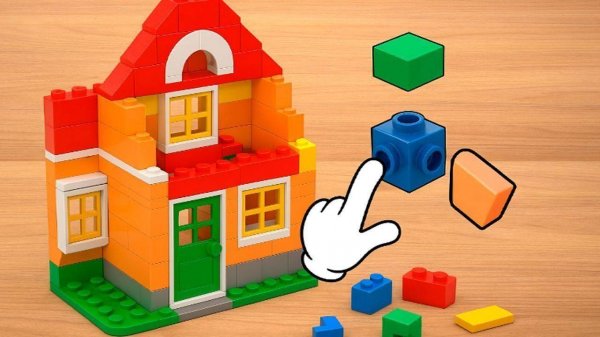
Block Assembly Puzzle Challenge
Reviews
Block Assembly Puzzle Challenge succeeds by narrowing its focus: match bricks to a blueprint, one step at a time. The gradual difficulty curve, color-coded pieces, and optional hints keep frustration low, while multi-part structures later on demand real planning. The low-poly visuals and subtle audio reinforce a relaxed tone. Its main limitation is that the appeal depends entirely on enjoying precise, guided assembly rather than creative freedom or competition.
About This Game
Blueprint Matching as the Core Loop
Block Assembly Puzzle Challenge builds its entire experience around one repeatable action: comparing a target blueprint against a scattered set of virtual bricks and reconstructing the model piece by piece. Each build begins with a defined collection of parts and a visual guide that breaks the assembly into ordered steps. Players select a brick, rotate it, and drag it into position until the structure matches the reference. Precision matters, because pieces only fit correctly when orientation and placement align with the blueprint.How Difficulty Ramps Up
Complexity climbs gradually rather than all at once. The earliest blueprints rely on basic shapes and a small number of pieces, which gives newcomers room to learn the drag-and-drop controls and rotation system without pressure. Later sets move into multi-part structures such as detailed cityscapes or landmarks, where the sequence of assembly becomes important and misplacing an early piece can throw off the rest. Because each completed model unlocks the next, progress is visible and steady.Interface, Feedback, and Atmosphere
The interface is deliberately clean. Bricks are color-coded and labeled so identification stays quick, rotation controls allow fine alignment, and a hint system offers a nudge when the next step is unclear without revealing the full solution. Models use a low-poly aesthetic that keeps attention on the building process, while background music and sound effects stay subtle. Together these choices create a relaxed pace suited to short or extended sessions.Who Gets the Most From It
The design leans toward players who enjoy methodical work. Spatial reasoning is exercised as bricks are visualized in three dimensions, and planning matters when deciding which piece to place next. The absence of violence, mature themes, or complicated mechanics makes it appropriate for younger players, while the cognitive demands give adults a reason to return. Family members can also take turns placing bricks or collaborate on larger models.Editorial Notes
Compatibility
💻 Desktop | 📱 Mobile | 📟 Tablet
– All supported · Best with Chrome or Safari
System Requirements
Faq
What do you actually do in Block Assembly Puzzle Challenge?
You receive a set of virtual bricks and a blueprint showing the finished model. Your job is to select each brick, rotate it as needed, and drag it into the correct position until the structure matches the reference. The game guides you step by step, so the task is assembly rather than free-form creation.
Is Block Assembly Puzzle Challenge suitable for young children?
The content contains no violence, mature themes, or complex mechanics, and the controls are simple enough for beginners to start immediately. Parents can let children play independently. The main demand is patience and attention to detail, so younger players may need help with the more intricate later blueprints.
Does the game tell you the correct order to place bricks?
Yes. Each model comes with a step-by-step visual guide, and early blueprints indicate every step clearly. As models grow more complex, the order of assembly starts to matter more, because placing certain pieces early affects how later pieces fit. The guide remains available throughout.
What happens if you get stuck on a blueprint?
A hint system is built in for moments when the next step is unclear. It offers guidance without giving away the entire solution, so you still complete the assembly yourself. This keeps the puzzle solvable without turning it into a walkthrough.
How does difficulty change as you progress?
Early blueprints use basic shapes and fewer pieces, which helps players learn the controls. Later challenges introduce multi-part structures like detailed cityscapes and landmarks that require closer observation and more complex spatial arrangements. The increase is gradual, so skills develop naturally rather than through sudden spikes.
Can more than one person work on the same model?
The game works well as a shared activity, with family members taking turns placing bricks or collaborating on larger models. The design supports this because the blueprint and piece set are visible to everyone, and each placement is a discrete step that another player can take over.















































Comments
0 comments